

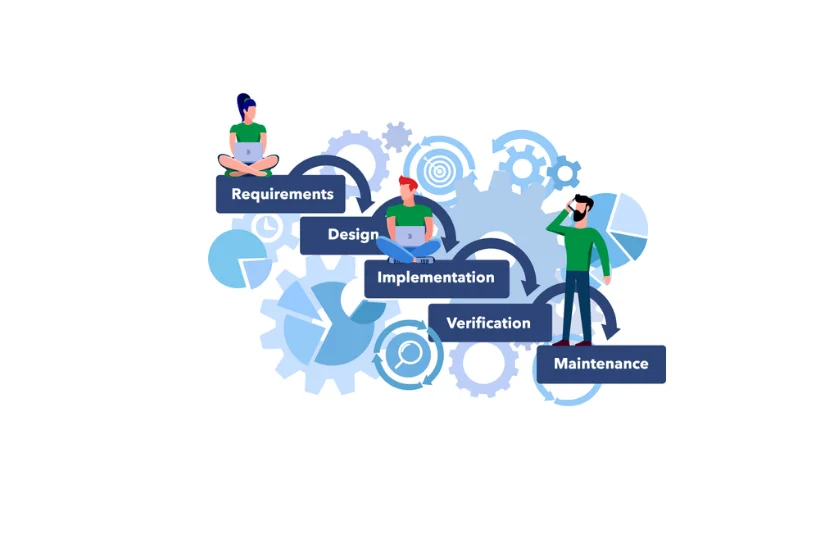
The Waterfall Model: The Complete Guide for Project Managers
Projects rarely fail due to a lack of motivation. They fail because of unclear structures. The waterfall model is a linear project approach with clearly defined, sequential phases. It offers a high degree of predictability, transparent processes and clear lines of responsibility – ideal for projects with stable requirements and a high need for documentation.
Key points at a glance
- The five phases: The waterfall model divides projects into five phases, each of which must be fully completed
- Ideal for clearly defined requirements: The method is suitable for projects where requirements are established from the outset and where structure and predictability are essential
- Comprehensive documentation: Requirements and specification documents, test reports and acceptance documents ensure traceability and meet regulatory requirements
- Change request processes: Subsequent changes can be integrated via a structured change request process without having to restart the project
- Tool support: Jira and Confluence support implementation with Gantt charts, centralised documentation and automated workflows
What is the waterfall model?

The waterfall model is a linear, phase-based approach to project management. Each phase is completed in full before the next one begins. Changes during the project are only possible to a limited extent, as the model relies on clear planning, comprehensive documentation and structured control.
Waterfall project management is particularly suitable where requirements are clearly defined from the outset and are unlikely to change significantly as the project progresses. Typical areas of application include sectors with high compliance requirements, fixed budgets or where comprehensive documentation is required – such as the construction industry, the pharmaceutical sector or public administration.
For project managers, the method offers traceable milestones, precise budgeting and a clear separation of roles between planning, implementation and quality assurance.
The 5 phases of the waterfall model
The Waterfall Model Phases
Phase 1: Requirements & Analysis
During this phase, all project objectives, functional requirements and technical parameters are identified. The result is a comprehensive set of documentation which serves as the basis for all subsequent steps.
A thorough requirements analysis is crucial. Errors made during this phase affect all subsequent steps and are difficult to rectify later on.Phase 2: Design and Planning
In this phase, a technical and conceptual design is drawn up based on the requirements that have been gathered. This phase sets out how the requirements are to be implemented – in technical, organisational and procedural terms.
The design serves as a blueprint for implementation. It defines interfaces, technologies and responsibilities.Phase 3: Implementation
During the implementation phase, the previously defined concepts are put into practice. Teams work on the basis of clearly defined work packages based on the design.
The focus is on the disciplined implementation of the specifications. Any deviations from the plan are documented and reviewed before they are implemented.Phase 4: Testing and Quality Assurance
Once implementation is complete, the project deliverable is systematically tested. This phase ensures that all requirements are met and that the deliverable functions without error.
Comprehensive quality assurance is essential. Any errors that go undetected at this stage will carry over directly into production and may result in significant follow-on costs.Phase 5: Roll-out and maintenance
In the final, fifth phase, the project deliverable is integrated into day-to-day operations. Maintenance processes and support organisations are put in place to ensure long-term operational reliability.
Extended Waterfall Model: Creating Greater Flexibility
The Waterfall Model vs. Agile Methods: Choosing the Right Approach
Waterfall or an agile method such as Scrum or Kanban? Not every method is suitable for every project. This overview will help you get your project off to a good start with the right approach:
Integrating changes: Change requests without a restart
One of the biggest challenges in a waterfall project is managing changes. Subsequent adjustments can be costly and time-consuming. However, with a structured change request process, changes can be integrated in a controlled manner.
Transparent communication and open consultation with all stakeholders are crucial in this regard. This is the only way to identify changes at an early stage and assess them collectively.
Implementing waterfall projects with Jira and Confluence

Jira and Confluence provide a solid foundation for managing waterfall projects in a structured manner, from planning right through to handover.
Jira handles structured planning and management: work packages can be created in phases, milestones scheduled and dependencies made visible. Using the BigPicture plugin, the team automatically generates Gantt charts that visualise the traditional project plan and remain up to date with every change. Deviations from the plan are immediately apparent and can be managed in a targeted manner.
Confluence serves as a central knowledge platform and supports collaboration and documentation: requirements specifications, functional specifications, test reports and acceptance documents are all stored in one place, version-controlled and accessible to all stakeholders at any time. An indispensable tool for a complete audit trail.
Checklist: How to use the waterfall model successfully in project management
This guide will help you keep track of everything at every stage of the project and ensure that no important step is overlooked.
Implementing waterfall projects successfully with Communardo

The waterfall model provides the structure that complex projects require, provided it is applied consistently and with the right tools.
As an experienced partner for project management and Atlassian solutions, Communardo supports you every step of the way: from choosing the right methodology and implementing the tools to ensuring they become firmly established within the team.
FAQs
The waterfall model is particularly suitable when requirements are clearly defined from the outset and are unlikely to change significantly as the project progresses. Typical scenarios for its use include projects with fixed budgets, long durations or high compliance requirements – for example, in the construction sector, the pharmaceutical industry or public administration.
Making changes at a later stage is time-consuming in the traditional waterfall model, but not impossible. With a structured change request process, they can be integrated in a controlled manner: the change request is submitted, assessed and – if approved – incorporated into the plan, budget and schedule. Alternatively, the extended waterfall model, which allows for targeted backtracking, offers greater flexibility.
If the traditional model is too rigid, there are tried-and-tested extensions. The waterfall model with backtracking allows for targeted corrections to be made in the preceding phase.
The V-model links each development phase directly to a parallel testing phase, thereby identifying errors much earlier.
And the hybrid model combines the structured planning of the waterfall model with agile elements in the implementation phase, for example in the form of sprints. What all these variants have in common is the aim of maintaining clear phases and comprehensive documentation, whilst being able to react more quickly to new findings.
You might also be interested in this


The Waterfall Model: The Complete Guide for Project Managers
Please feel free to arrange a personal, no-obligation consultation with our Atlassian sales experts.

Your contact person
Marlen KaiserWe're happy to help you
- Kleiststraße 10a, 01129 Dresden, Germany
- Tel: 0800 8 776 776
- sales@communardo.de